Discovering Bhutan's Most Extraordinary Places
Bhutan may be one of the smallest countries in Asia, but what it lacks in size, it more than compensates for in sheer grandeur. Every valley holds a sacred monastery, every hilltop is crowned with a fortress, and every turn in the road reveals a view that takes your breath away. Having guided hundreds of travellers through this remarkable kingdom, we have curated the ten absolute must-visit attractions that capture the essence of Bhutan. Whether you have five days or five weeks, these are the places that will define your Bhutan experience.
1. Tiger's Nest Monastery (Paro Taktsang)
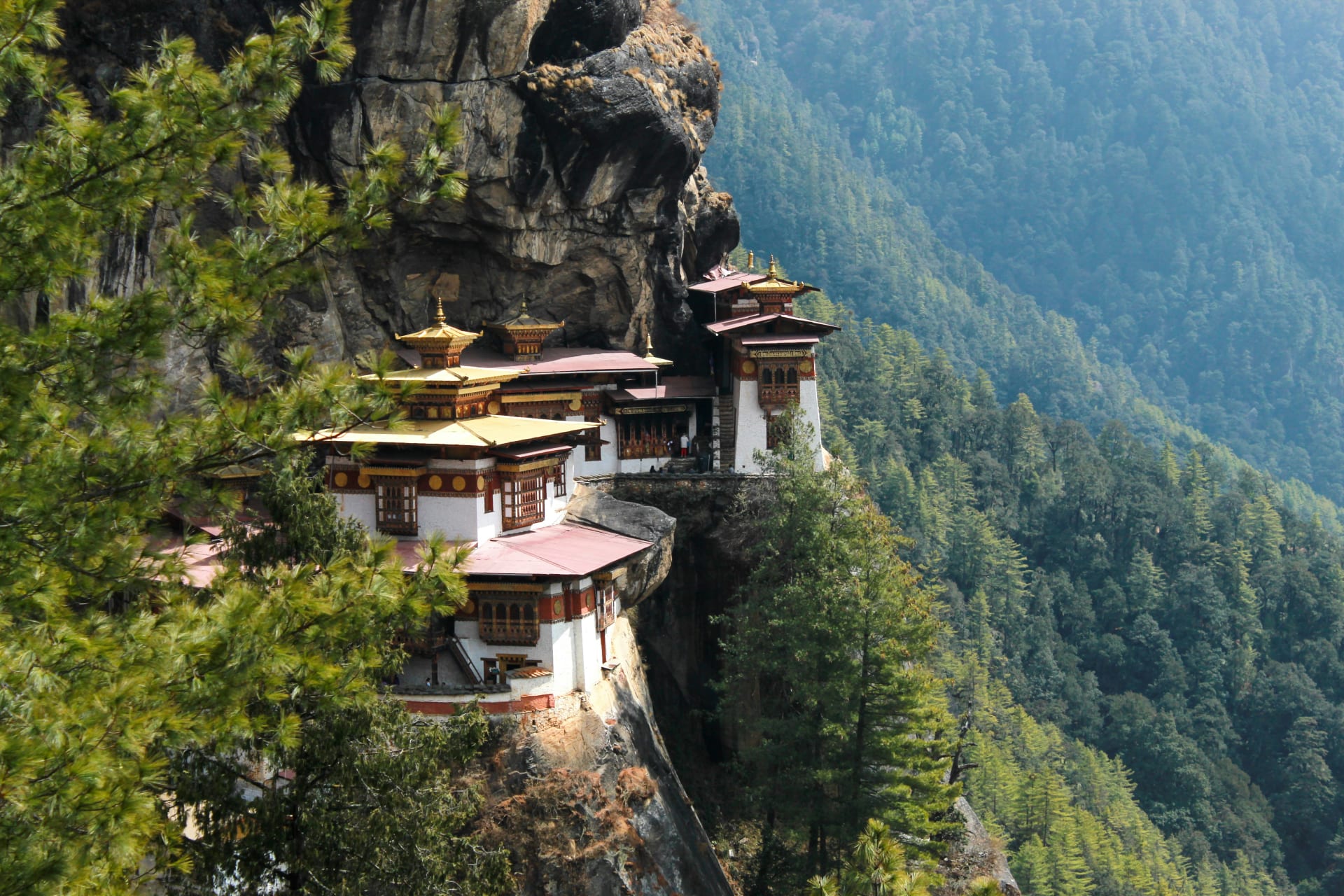
Let us begin with the undisputed crown jewel of Bhutan. Paro Taktsang, the Tiger's Nest Monastery, clings impossibly to a sheer cliff face 3,120 metres above sea level, overlooking the Paro Valley with a dramatic intensity that no photograph can truly capture. The monastery complex consists of four main temples and several auxiliary buildings, all connected by steep stone steps and narrow pathways carved into the rock.
The hike to Taktsang takes approximately two hours from the base, winding through ancient pine forests adorned with colourful prayer flags. Along the way, you will hear the gentle tinkling of wind chimes and the distant murmur of monks in prayer. A cafeteria at the halfway point provides a welcome rest with stunning views of the monastery above. The legend tells that Guru Rinpoche, who brought Buddhism to Bhutan, flew to this cliff on the back of a tigress and meditated in a cave for three years, three months, three weeks, and three days. Whether you approach it as a pilgrim or a traveller, reaching Taktsang is a profoundly moving experience.
2. Punakha Dzong (Palace of Great Happiness)
Standing majestically at the confluence of the Pho Chhu and Mo Chhu rivers, Punakha Dzong is widely regarded as the most beautiful fortress in Bhutan. Built in 1637 by Zhabdrung Ngawang Namgyal, the unifier of Bhutan, this architectural masterpiece served as the capital and seat of government for over three centuries. The dzong's whitewashed walls, golden-red woodwork, and towering central tower create a scene of breathtaking beauty, especially when viewed from the wooden cantilever bridge that spans the river.
Inside, the dzong reveals an extraordinary world of intricate murals, golden statues, and sacred relics. The main assembly hall houses a magnificent golden throne, and the inner courtyards are adorned with blooming jacaranda trees in spring. Punakha Dzong also plays a central role in Bhutanese governance, hosting the annual Punakha Drubchen and serving as the winter residence of the Je Khenpo, the chief abbot of Bhutan. Plan to spend at least two hours exploring this magnificent structure, and be sure to walk the suspension bridge across the Mo Chhu for the finest photographic vantage point.
3. Buddha Dordenma Statue (Thimphu)
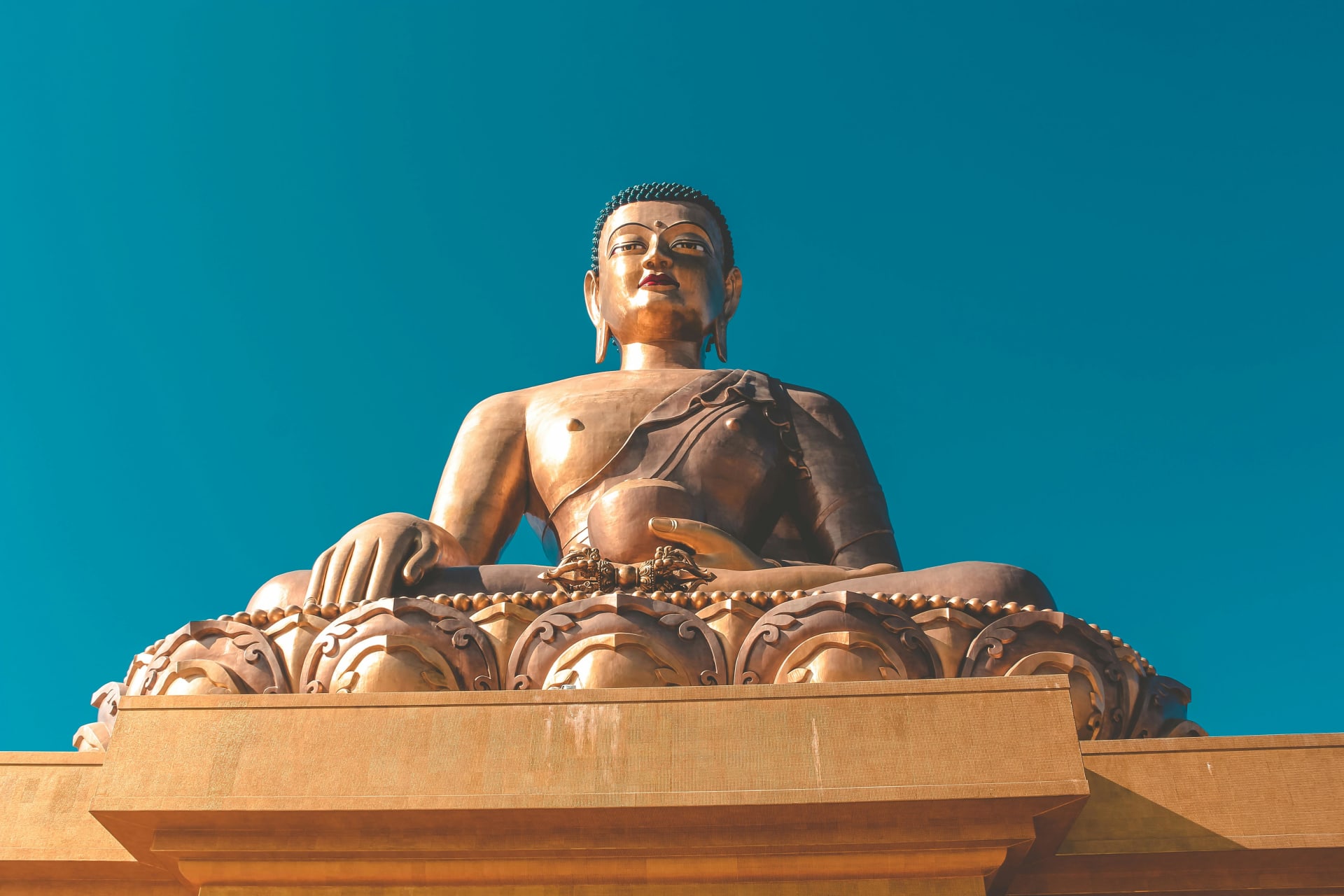
Towering 51.5 metres above the Kuenselphodrang Nature Park, the Buddha Dordenma is one of the largest seated Buddha statues in the world. Commissioned to celebrate the 60th anniversary of the Fourth King, this magnificent bronze and gold structure took nearly a decade to complete and contains over 125,000 smaller Buddha statues within its body. The throne upon which the Buddha sits is a large meditation hall with stunning interiors featuring elaborate Buddhist iconography.
The site offers panoramic views of the entire Thimphu Valley, making it an ideal spot for sunrise or sunset visits. The surrounding park is beautifully landscaped with walking trails, prayer wheels, and gardens. The sheer scale and serenity of the Buddha Dordenma make it one of the most memorable landmarks in all of Bhutan. For many visitors, the moment they first see this golden giant emerging from the mist-shrouded hills is one of their most cherished travel memories.
4. Phobjikha Valley (Gangtey)
The Phobjikha Valley is a place of extraordinary natural beauty and profound tranquillity. This vast, bowl-shaped glacial valley sits at an altitude of 3,000 metres and is surrounded by dense forests of pine and rhododendron. The valley floor is a carpet of dwarf bamboo and alpine meadows, threaded by a crystal-clear stream. But what truly sets Phobjikha apart is its role as the winter home of the black-necked crane, an endangered species that migrates from the Tibetan Plateau each year between late October and early March.
The Black-Necked Crane Information Centre offers fascinating insights into these elegant birds and the conservation efforts protecting them. The nearby Gangtey Monastery, perched on a hilltop overlooking the valley, is one of the most important Nyingmapa monasteries in Bhutan. The short Gangtey Nature Trail, a gentle one-and-a-half-hour walk through the valley, is one of the most rewarding hikes in Bhutan and offers the chance to spot cranes, deer, and other wildlife in their natural habitat. In a country full of remarkable places, Phobjikha stands out for its pristine, almost otherworldly beauty.
5. Trongsa Dzong and Ta Dzong
Trongsa Dzong is the largest fortress in Bhutan and holds immense historical significance. Perched above the Mangde River gorge, this massive complex stretches along a ridge with a commanding view of the surrounding valleys. Every king of Bhutan has served as governor of Trongsa before ascending the throne, making this dzong the ancestral seat of the Wangchuck dynasty. The sprawling complex contains over twenty temples, numerous courtyards, and a labyrinth of corridors and passageways.
Across the gorge, the Ta Dzong (watchtower) has been converted into a superb museum showcasing the history of the Bhutanese monarchy and the heritage of Trongsa region. The five-storey museum features rare artefacts, personal belongings of past kings, and fascinating exhibits on Bhutanese art and culture. The drive to Trongsa from either Thimphu or Bumthang crosses some of the most dramatic mountain passes in Bhutan, including the Pele La pass at 3,420 metres.
6. Bumthang Valley
Often called the spiritual heartland of Bhutan, the Bumthang Valley is actually a collection of four beautiful valleys — Chokhor, Tang, Ura, and Chhume. This region is steeped in Buddhist mythology and history, containing more sacred sites and temples than anywhere else in the country. The legendary Guru Rinpoche is said to have meditated in several caves here, and the valley is dotted with ancient monasteries that predate most other religious structures in Bhutan.
Key sites include Jambay Lhakhang, one of the 108 temples built by the Tibetan king Songtsen Gampo in a single day; Kurjey Lhakhang, where Guru Rinpoche left his body imprint on a rock; and the burning lake of Mebar Tsho, where the great treasure discoverer Pema Lingpa found sacred texts. The Bumthang region is also famous for its distinctive red panda honey, local cheese, and traditional weaving. The Ura Valley, with its cluster of traditional farmhouses and cobblestone paths, feels like stepping back centuries in time.
7. Dochula Pass and the 108 Chortens
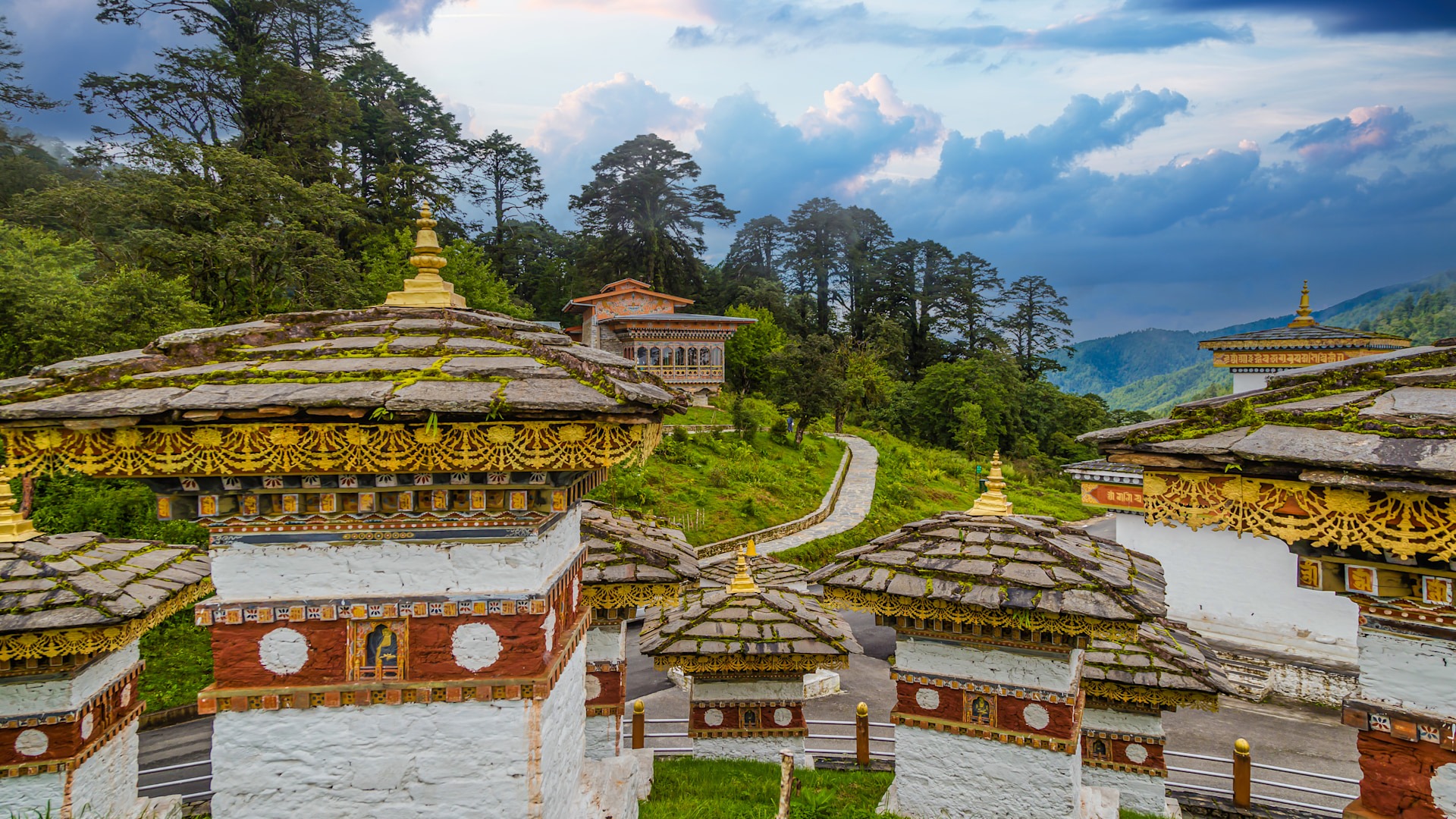
At 3,100 metres above sea level, Dochula Pass offers one of the most spectacular panoramic views in all of Bhutan. On a clear day, you can see a stunning chain of Himalayan peaks stretching across the horizon, including Mount Gangkar Puensum, the highest unclimbed mountain in the world at 7,570 metres. The pass is adorned with 108 memorial chortens (stupas) known as the Druk Wangyal Chortens, built by Her Majesty the Queen Mother to honour Bhutanese soldiers who lost their lives in a 2003 military operation.
The adjacent Druk Wangyal Lhakhang temple features beautiful murals depicting scenes from Bhutanese history and mythology. The flower gardens surrounding the chortens burst with colour in spring and summer, and the mist that frequently envelopes the pass creates an ethereal, almost mystical atmosphere. Every visitor to Bhutan travels through Dochula Pass on the Thimphu to Punakha highway, and it invariably becomes one of the most photographed stops on any itinerary.
8. National Memorial Chorten (Thimphu)
The National Memorial Chorten in central Thimphu is one of the most visible religious landmarks in Bhutan. Built in 1974 in memory of the Third King, Jigme Dorji Wangchuck, this elegant white structure with its golden crown is a focal point of daily religious life. From dawn to dusk, you will find Bhutanese people of all ages circumambulating the chorten, spinning prayer wheels, and offering prayers. The atmosphere is deeply spiritual yet joyful, with elderly devotees chanting mantras alongside young families out for an evening stroll.
The chorten is designed in Tibetan style with elaborate mandalas, statues, and shrines in each of its four directional chapels. The painted exteriors depict intricate Buddhist iconography, and the surrounding gardens provide a peaceful retreat from the bustling city. Visiting the Memorial Chorten offers a rare glimpse into the everyday spiritual practice of ordinary Bhutanese people, making it an essential cultural experience.
9. Rinpung Dzong (Paro Dzong)
Dominating the Paro skyline, Rinpung Dzong is a magnificent fortress that houses both the district administration and the monastic body. Its name means "Fortress on a Heap of Jewels," and the approach to the dzong — across a traditional covered wooden bridge spanning the Paro River — is one of the most iconic images of Bhutan. The dzong was built in the 15th century and has been carefully maintained and expanded over the centuries.
The central tower (utse) is particularly noteworthy for its outstanding woodwork and beautiful murals. The annual Paro Tshechu festival is held in the dzong's vast courtyard, where hundreds of monks perform sacred masked dances before thousands of devotees and visitors. Even outside festival season, the dzong is a working religious and administrative centre, offering a fascinating window into how ancient traditions and modern governance coexist in Bhutan.
10. Haa Valley
The Haa Valley, opened to tourism only in 2002, remains one of Bhutan's most pristine and least-visited regions. Located west of Paro and connected by the dramatic Cheli La pass (at 3,988 metres, the highest motorable pass in Bhutan), Haa offers a glimpse into traditional Bhutanese life that is increasingly rare in more touristy areas. The valley is framed by towering peaks and blanketed with fields of wheat, barley, and millet.
Key attractions include the Lhakhang Karpo (White Temple) and Lhakhang Nagpo (Black Temple), believed to have been built in the 7th century; the Haa Wangchulo Dzong; and the remote Tagchu Goemba monastery. The drive over Cheli La pass provides breathtaking views of Mount Jomolhari and the surrounding peaks. Haa Valley can be visited as a day trip from Paro or as an overnight stay in one of the traditional farmhouses that have been converted into homestays. For travellers seeking authentic cultural immersion away from the standard tourist circuit, Haa is an absolute gem.
Planning Your Itinerary
Most visitors to Bhutan spend between five and ten days, which allows sufficient time to explore Paro, Thimphu, Punakha, and either the Phobjikha Valley or Bumthang region. A seven-day itinerary can comfortably cover the western and central regions, including all the attractions listed above except Trongsa and Bumthang, which require additional travel time. For a comprehensive experience including the spiritual heartland of Bumthang, plan for ten to twelve days.
At Himalayan Marvels, we specialise in crafting bespoke itineraries that match your interests, fitness level, and timeframe. Whether you are drawn to ancient monasteries, spectacular mountain scenery, vibrant festivals, or authentic cultural encounters, we will design a journey through these extraordinary places that exceeds your expectations. Contact us to begin planning your dream trip to the Land of the Thunder Dragon.